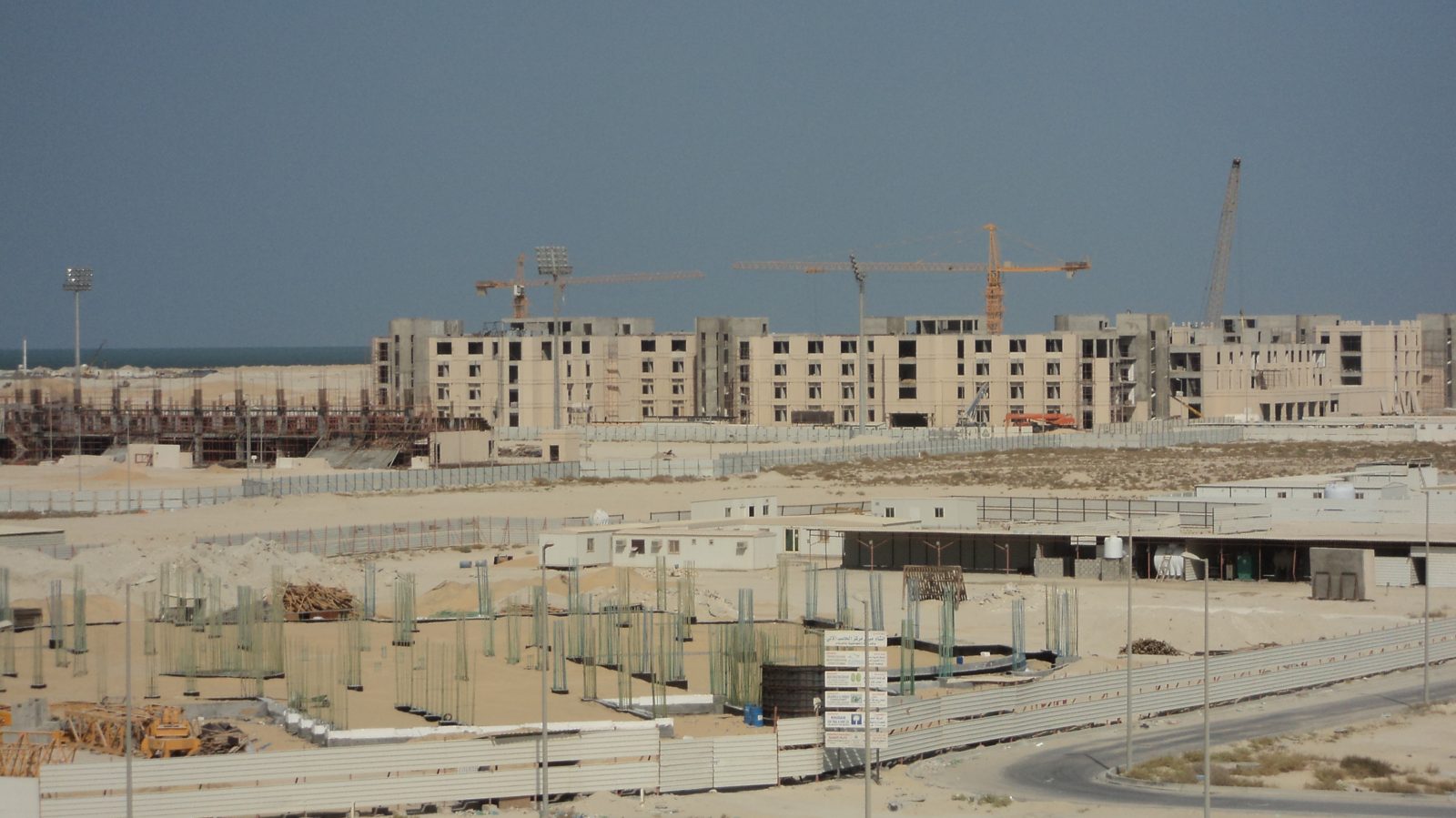
A crane badged 500T does not lift 500 tonnes where you need it. That figure applies at minimum radius in a specific configuration. Real capacity is whatever the load chart allows at your radius, your boom length and your counterweight — often a fraction of the badge.
Start from the chart, not the headline
- Take gross load, then add rigging, hook block, jib and any auxiliary equipment
- Read capacity at the actual working radius, not the best case
- Keep utilisation comfortably below 100% — 75–85% is a healthy planning target
- Check tail swing, counterweight footprint and slew clearance against the site plan
Matching capacity to project type
Vertical residential and commercial build-out typically lands in the 100T–250T all-terrain band. Major infrastructure and Vision 2030 projects — long-span girders, precast marine units, module setting — push into 400T–800T crawler territory. Fit-out, MEP and plant-room work stays in the 30T–80T range where fast rigging and small footprints matter more than raw capacity.
Ground bearing is a capacity limit too
Outrigger and track pressures on reclaimed or desert-fill ground frequently decide the crane before the load chart does. We calculate bearing pressures and specify mats as part of lift planning, so the machine you approve is the machine the ground will accept.
Undersizing costs a failed lift. Oversizing costs every day of the rental. The chart settles the argument.